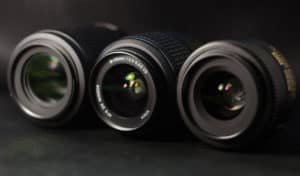
Friday, 25 May 2018

Vortex Diamondback 10×50 Binocular Review 2017 – 2018

Looking for high-end, powerful binoculars to take your bird watching, wild-life observation, sports viewing, seal gazing or other hobbies to the next level?

If you’re reading this, it’s safe to assume you’re looking for a new pair of binoculars. Whether you’re shopping for yourself or a loved one, it can be hard to choose specific binoculars when there are so many options floating around.

We have compiled all the features of a particular type of binoculars, the Vortex Diamonback, in one accessible list so you have a clear idea of what’s on offer.

Compact
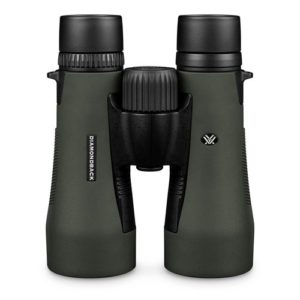
Thanks to a new design change, these Diamonback binoculars (learn more here!)are even more compact than earlier models.

Compact binoculars are a good choice for hikers, backpackers and anyone who wants to be able to whip their binoculars out at a moment’s notice without having to lug a heavy object around all day.

Dielectric Coating

If you’re going to invest in a pair of binoculars, you’ll want clear and precise images.

The Vortex Diamonback has a dielectric coating layer on the prism which helps capture to ensure clear, vivid images no matter what the sky is like.

Long And Close Distance

The vortex Diamonback has 10x magnification, so it will bring the object you are observing 10 times closer to you than it would appear with the naked eye.

Magnification is all well and good, but what if you want to observe a subject up close and see all the tiny details that you would miss with the naked eye?

Close focus allows you to get a closer look at tiny insects, catch all the vibrant details of a birds feathers, or see every spot, tooth and eyelash during a wildlife track.

The Vortex Diamonback binoculars have a 2-meter focus distance, which allows you to get even closer to nature (or whatever you want to observe).

Fog Proof

There’s nothing worse than getting ready for a day of bird-watching only to find that your binoculars are foggier than Victorian Britain.

Luckily, these binoculars are Argon gas-purged, which protects the lenses from fogging up. Not only will this improve your view, but it protects the lenses from moisture damage.

Waterproof

No one wants their binoculars to get ruined in an unexpected down poor, but luckily the Vortex Diamonback binoculars are O-ring sealed which stops water, dust and other nasties from getting inside the binoculars for extra durability and, of course, better images.

Rubber Armor

Don’t settle for flimsy binoculars; invest in something better. The Vortex Diamonback binoculars include rubber Armor which ensures a non-slip grip and external protection in all weather conditions.

Adjustable Eyecups
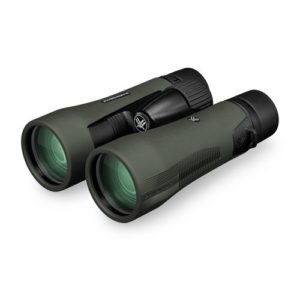
People who wear glasses should be able to enjoy binoculars too, but unfortunately some binoculars aren’t accessible for eye glass wearers.

These binoculars have adjustable eyecups which can be moved away from the face to accommodate people who wear glasses.

Centre Focus Wheel

When you want to adjust the focus of these binoculars, simply turn the centre focus wheel accordingly to adjust both binocular barrels instantaneously.

Diopter

Some eyes see things differently, so why pick a pair of binoculars that expects every pair of eyes to be identical?

If you have different eyesight requirements for each eye, you can adjust the Diopter on the Vortex Diamonback binoculars for each individual eye so your over-all image is clearer.

Tripod Adaptable

Want to use your binoculars on a tripod? The Vortex Diamonback is tripod adaptable and can be used on a tripod or car window mount for hours of strain-free viewing.

Summary

Features: Compact – Dialectric Coating – Fogproof – Waterproof – Rubber Armor – Adjustable Eyecups – Centre Focus Wheel – Adjusts For Individual Eye Needs – Tripod Adaptable.

Pricing: High-End.

CHECK THE LATEST PRICE NOW!

Read more about Vortex Diamondback 10×50 Binocular Review 2017 – 2018 on Best Binoculars.

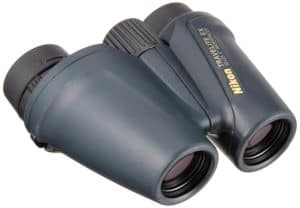
Nikon 10 X 25 Travelite EX Waterproof Binoculars Review 2017 – 2018

Are you an intrepid explorer who’s always on the go? Do you have lots of places to go and scenery to see? Do nature watching, hiking, and adventuring bring you excitement and inspiration? If any of these things sounds like a good description of you then you’ll be needing some reliable, durable, and easily portable binoculars to accompany on your endeavours.

There’s nothing worse than finding a beautiful location, hearing the birds chirp and sing in the trees, and catching glimpses of other wildlife but not being able to quite appreciate what is going on because you’re slightly too far away to properly see. What is that monkey up to? Where did that squirrel go? Eliminate the questions with a pair of waterproof Nikon 10 X 25 Travelite binoculars! Be the envy of your hiking friends when you pull these beauties out of your backpack and use them to enjoy the majesty around you.

A great product from a trusted brand name, these Nikon binoculars (learn more here!) offer a wide range of selling points that will be sure to satisfy your requirements and give you an amazing viewing experience. Let’s take a look now, shall we?

  • Arsenic-free eco-glass lenses which are a much more sustainable alternative to other types of glass, and offer an eco-friendly viewing experience you can be confident in.
  • Aspherical eyepiece lens to align with the high-eyepoint design, giving you an ergonomic and comfortable focusing experience.
  • Dioptic adjuster ring which gives you the reigns to tailor the focus to your specific target and eyesight.
  • Aluminium die-cast body for increased protection and durability even in rugged terrain.

These are just a few of this Nikon’s best features, and in addition to these, the binoculars are also waterproof, scratch resistant, and very compact. Travel and explore in style with these one-of-a-kind binoculars that are not only designed for your every benefit, but also take the planet’s health into account. Get out there and enjoy some guilt-free viewing!

Summary

Features: Arsenic-free eco-glass lenses – Aspherical eyepiece lens – Dioptic adjuster ring – Aluminium die-cast body.

Pricing: Affordable

CHECK THE LATEST PRICE NOW!

Read more about Nikon 10 X 25 Travelite EX Waterproof Binoculars Review 2017 – 2018 on Best Binoculars.
Thursday, 24 May 2018

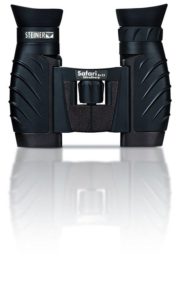
Steiner Safari Ultrasharp 8×22 Binocular Review 2017 – 2018

Looking for a pair of new binoculars? Eager to take up bird watching, wildlife observation, watching sports or spying on the neighbours?

It’s hard to find the right pair of binoculars. With so many numbers floating around, how can you know what it all means and which specifications you’ll need for your chosen activity?

A binocular which is superb at bird watching may be sub-par when it comes to astronomy, so it’s important you choose a model which is right for you.

Is the Steiner Safari UltraSharp the right choice for you? Find out below!

Compact Size

Binoculars are no good if they’re annoying to take on hikes, camping trips or day-time strolls. The Steiner Safari UltraSharp binoculars (learn more here!) have a compact design and can easily fit into a jacket pocket or small purse.  

Light Weight

Weighing just 228 grams, these binoculars are super lightweight and won’t weigh your bag down. This is important if you’re planning on holding the binoculars for extended periods or if you want to take them hiking, because you don’t want to wind up with sore arms.

Magnification

The whole point of buying binoculars is to see far away objects up close, so there’s no point in buying binoculars that don’t have good magnification options.

The Steiner Safari UltraSharp binoculars have 8x magnification, which means they bring objects 8 times closer to you.

Experts recommend you buy binoculars with between 7xand 12x magnification. You might assume the more magnification a pair of binoculars has the better they will be, but magnifications of 13x or more amplify the smallest hand movements.

If your hands shake or twitch, your whole image will wobble and probably go out of focus.

Larger magnifications also reduce the field of vision significantly, so you might miss out on something important.

The Steiner UltraSharp binoculars also contain high performance high-contrast optics to make the images you see sharp and clear.

Clear Pictures Every Time

We can’t control the weather, so it can be disheartening if you plan a viewing day only to have it ruined by poor light conditions.

The Steiner Sari binoculars is able to capture enough light to give you vibrant, compelling images, even in bad lighting or during the darker hours.

Perfect For All Levels

Whether you’re just starting out or an experienced viewer with a long history of binocular usage, the Steiner UltraSharp binoculars will give you what you need for superb quality observations.

They include maximum precision lenses and prisms which are coated to stop the light reflecting away so you can see the objects in all their glory.

The Steiner Ultrasharp binoculars also come with 3D features which are designed to help bring far away object to life.

Focus

Binoculars can be finickity and hard to get in focus, which is why the Steiner Safari UltraSharp comes with a focusing knob for super easy, smooth and accessible adjustments which can even be used when you’re wearing gloves!

Ergonomic

Binoculars are best when they’re comfortable, so the Steiner Safari comes with soft, silicone eyecups which are comfortable against the skin.

Do you wear glasses? Not a problem! The eye cups can be folded down so people with glasses can see the whole field of vision.

These binoculars are also designed to fit comfortable and securely in your hand, while the non-slip grips and focus wheel adds extra security no matter if you’re wearing gloves or not.

Robust & Durable

Binoculars are an investment and you don’t want something that is going to be ruined during bad weather conditions.

Steiner binoculars have a rugged, resilient design which his so effective the company has used it for over 60 years!

These binoculars are made from high-quality rubber which offers shock protection and absorption for ergonomic usage.

Summary

Features:  Compact – Light Weight – 8x Magnification – Maximum Precision Lenses – 3D Brilliance – Focusing Knob – Suitable For Glasses – Comfortable – Non-Slip Grip – Durable – Rugged, Resilient Design – High Quality Rubber.

Pricing:  Mid-Range

CHECK THE LATEST PRICE NOW!

Read more about Steiner Safari Ultrasharp 8×22 Binocular Review 2017 – 2018 on Best Binoculars.

Wednesday, 23 May 2018

Celestron Skymaster 25×70 Binocular Review 2017 – 2018

Are you looking for a pair of large binoculars which are suitable for astronomical and land observations?

Whether you want to watch birds or spot galaxies, the Celestron Binoculars are the way to go.

Suitable For Land And Star Gazing

Want to see the craters on the moon, gaze into distant galaxies and explore the constellations without having to fork out for a large telescope?

The Celestron 71008 (learn more here!) comes with multi-coated optics which are designed to give you sharp, clear views that extend into the heavens.

Whether you want to study birds or extra-terrestrials, these are the binoculars for you.

Aperture

The aperture on a pair of binoculars refers to their light gathering ability, i.e. how much light can enter the binoculars. This is important, because higher aperture allows you to see more objects.

The Celestron SkyMaster has a large aperture which is perfect for observing far-away objects.

Ultra-Sharp Focus

Some binoculars go in and out of focus seemingly at random, but the Celestron 71800 comes with a large centre focus knob which allows for each focusing with minimal effort and zero stress.

Objective Lens

The Celestron 71800 Binoculars comes with 100 mm objective lens which are optimised to give you maximum brightness, even in bad lighting and long-range situations.

Protective Rubber

The Celestron 71800 binoculars come with a protective rubber covering that ensures comfort while simultaneously protecting the binoculars and giving you a firmer, more secure grip.

Tripod

If you’re settling in for a long star-gazing session and you don’t want to have to hold the binoculars for hours on end, you’ll be happy to hear that the Celestron 71008 come with an integrated tripod adapter rod which makes them easy to mount on a tripod.

This adapter also ensures a stable fit, so the binoculars won’t wobble or, worse, fall over.

Long Eye Relief

If you wear glasses and you’re worried that the binoculars won’t be accessible for you, don’t despair. The Celestron 7008 comes with long eye relief which is specially designed for optimum comfort for eyeglass wearers.

Carry Case

When you’re heading to your amateur astronomer club or into the countryside for a spot of bird watching, you’ll want a safe and secure travel case to keep your binoculars in.

The Celestron 71008 comes with a free carry case which makes it super easy to carry the binoculars around and keep them safe in storage when you’re not using them.

Weatherproof

We can’t always predict which way the weather is going to turn, so it’s important to make sure your binoculars won’t be destroyed by wet weather conditions.

The Celestron 71008 is water resistant, thus protecting the binoculars from showers. You won’t be able to submerge your binoculars in a pond and expect them to be perfectly fine, but they will be able to handle unexpected weather changes.

Summary

Features:  Suitable For Astronomy – Large Centre Focus Knob – 100 MM Objective Lens – Protective Rubber – Tripod – Long Eye Relief – Carry Case – Weatherproof.

Pricing:  Mid-Range

CHECK THE LATEST PRICE NOW!

Read more about Celestron Skymaster 25×70 Binocular Review 2017 – 2018 on Best Binoculars.
Celestron Ultima 80 Scope Monocular Review 2017 – 2018

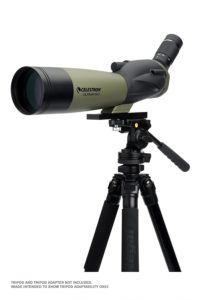
Are you an enthusiast bird watcher? Do you enjoy going on exotic safaris and trying to spot as many amazing wild animals as possible? Have you ever been whale watching? Maybe you haven’t done any of these things, but maybe you’d like to. If any of this rings true to you then you’ll be needing a high-quality spotting scope to help you on your adventures. And if you already have one, then consider this an upgrade!

With this amazing product from Celestron, you can see further, and go further than ever before, maximising the opportunity for possibilities wherever you are. Imagine feeling like you have no boundaries anymore. That’s a fantastic feeling and you deserve to feel it.

If you’re still feeling sceptical about just how good the Celestron 52250 Ultima Spotting Scope (learn more here!) is, then check out its defining features below and feel your mind open up to the possibilities:

  • 80mm refractor spotting scope with multi-coated optics to enable optimal viewing in numerous different landscapes and situations so that you never miss out.
  • 45° viewing angle for a more ergonomic position, allowing more sustained viewing.
  • 20-60x zooming capabilities, making sure you can catch every detail, even from far away.
  • Sleek sight tube for fast targeting so you don’t miss the fleeting action.

The Celestron 52250 Ultima Spotting Scope is also waterproof and comes with a protective carrying case so that you can enjoy your adventure in any weather and not have to worry about damaging your equipment. Does that sound like a win?

Summary

Features: 80mm refractor scope – 45° viewing angle – 20-60x zoom – Sight tube – Multi-coated optics

Pricing: High-end

CHECK THE LATEST PRICE NOW!

Read more about Celestron Ultima 80 Scope Monocular Review 2017 – 2018 on Best Binoculars.

Tuesday, 22 May 2018

How To Use Binoculars – The Guide That You’ve Been Looking For!

You’ve done your product research, bought your binoculars and you’re ready to start observing, but there’s just one problem: you don’t know how to use the features for the best viewing experience.

Binoculars look easy, but there are lots of adjustments, options and settings you can use to improve your view. If you would like to learn more about using binoculars, read on!

Strap Adjustment

If you’re binoculars come with a strap that you can wear around your neck, you’ll need to adjust them to make sure they’re comfortable to carry and won’t keep hitting you!

How you adjust the straps will depend on the specific device, but you can normally thread the ends of the straps through the loop until they are dangling comfortably.

Eye Cup Adjustment & Eye Relief

The eye cups on your binoculars are what you will be looking through, so you’ll want to adjust them so you can observe comfortably.
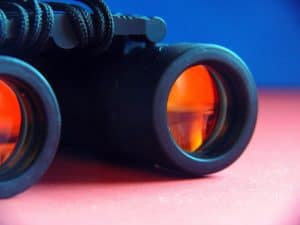
If you are long or short sighted, you may be able to use the binoculars without your glasses because you can use the focusing mechanism to adjust to suit your eyesight.

If, however, you need to wear your glasses, you should still be able to use your binoculars.

Eye relief refers to the maximum distance that can exist between your eye and the lens while still allowing you to see the full field of vision available.

If you’ll need to wear your glasses when using the binoculars, look for binoculars which have 14 mm eye relief or above.

Many binoculars come with adjustable eye cups which can be twisted up or down.  If you wear glasses, twist the eye cups down so they won’t get in the way. If you don’t wear glasses, twist the eye cups up.

Barrel Adjustment

Not all faces are the same, so different customers will need different their binocular barrels to be at different widths.
If you need to adjust the barrel width so it fits comfortable in front of your eyes, hold the binoculars up to your eyes, look through the eye cups and twist the barrels until they line up.

Diopter Adjustment

First, you’ll need to pick an object that you can focus on. Ideally, this object shouldn’t be moving so you may want to pick a statue, a lamp post, or whatever is around.

Close one of your eyes and bring the binoculars up to your face. Peer through the binoculars with your open eye.

Rotate the central focus knob (or the separate diopter adjustment knob if that’s what you have) until the image is in focus.

Now follow the same procedure with your other eye. When you have done both, the binoculars should be properly adjusted for both eyes and the image you see should be clear and in focus.

Once you have adjusted the diopter, you should be able to use the central focus knob to bring the object into focus for both eyes without having to individually adjust them.

If you have any problems with this, refer to your user instructions or the company’s customer service team.

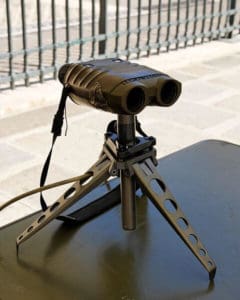
How To Attach A Tripod Mount To A Binocular

Find the tripod socket cover in the middle of the binoculars, between the two barrels.  The socket cover can be removed with a coin or screw driver if it has a slot, but if there is no slot you should be able to remove it by hand.
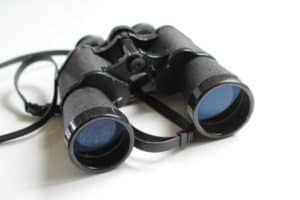
Once the cover is removed, you should be able to see a small socket. Put the tripod mount into the socket and turn until it is tight.

You should now be able to attack the socket on the bottom of the mount onto the tripod, adjust until it is tight, and it should be read to use!

Verdict

I hope this post has answered your questions and you’re ready to start using your binoculars. If you’re looking to buy a pair of binoculars, take a look at our other posts!

Read more about How To Use Binoculars – The Guide That You’ve Been Looking For! on Best Binoculars.

Monday, 21 May 2018

How To Choose Binoculars? Find Out Which Ones Are Best For You!

When it comes to binoculars, there is no one size fits. Some binoculars are fantastic for astronomy, but not so good for bird watching.

Other binoculars are perfect for hunting game, but won’t be much use when you’re trying to count the craters on the moon.

If you don’t know your aperture from your armpit and you need some help with the technical terms, you’ve come to the right place. Read on to find out how you can pick the perfect binoculars for your needs.

Magnification

As you’d imagine, the magnification power of a binocular refers to how much closer an object appears to you.
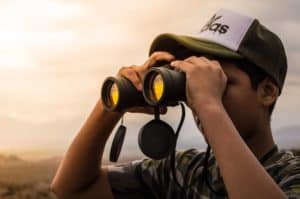
For example, 10 x 35 would bring an object 10 times closer than it would appear with the naked eye.

You may be tempted to buy the binoculars with the highest magnification power, but that isn’t always a good idea. Binoculars that have a magnification of 11x or higher will amplify the movement of your hands.

Whenever your hand shakes, the whole image will shake. This can be solved with a tripod, but keep it in mind to avoid disappointment.

Size

Bigger isn’t always better when it comes to binoculars. Here’s a guide on how to choose the right size for you.

Compact

Compact binoculars come in a range of specs, but the most common ones you’ll find will be 8 x 25 to 10 x 25.

These binoculars are ideal for backpacking trips, light bird watching and quick usage, but they’re not a good choice for more detailed observation or in cases where you want to use them for a long period of time.

Simply put, compact binoculars are the right choice if you’re looking for something light-weight, easy to carry and suitable for fun, less serious use, but they’re not a good choice for advanced or specialist users who want to observe for hours on end.

Mid-Size

Mid-size binoculars range from around 7x 35 to 10 x 32. They are less light-weight and might be a bit uncomfortable if you need to hike with them.

They are, however, a good choice for watching sports, wildlife and bird watching, or other activities where you want to really get into your observation without spending a lot of money.

Full Size

Larger binoculars have a higher aperture, which means they can collect more light and give you better images in darker settings.

These binoculars are larger and heavier than the other options, so they’re not a good choice for hiking and they won’t fit in your purse.

They do, however, have a wider field of view so they’re a good choice for serious wildlife observations.

Objective Lens Diameter

The objective lens diameter means the diameter of the lens measured in millimetres. The diameter of the lenses is a good indication of how much light your binoculars can catch.

The larger the diameter, the more light can enter the binoculars and the brighter your images will appear. This is especially important at dawn, dusk and in low light situations.

Exit Pupil

The exit pupil number is measured in millimetres and can be found by dividing the diameter of the objective lenses by the magnification number.

This number is used to show how bright an object will look when you observe it in darker settings. The higher the number, the brighter the image

Remember that while a larger exit pupil number is best for low lighting, it won’t be much use on a sunny day.

Relative Brightness

The relative brightness umber is found by squaring the exit pupil. It is another measure of brightness and again the higher the number, the brighter the objects.

Field Of View

The field of view lets you know how large the area that you can see through the binoculars will be. It is usually measured in feet and measures how much you will be able to see 1,000 years from where you are.

Wide fields of view are better for moving objects, such as birds or when watching sports. Higher magnification numbers often reduce the field of view which will be a problem if you want to observe multiple subjects at once, so keep that in mind when weighing up your options.

Tripod Adaptable

If you’re planning on lots of long observation sessions without much movement on your part, you may want to find a pair of binoculars that can be mounted on a tripod or, even better, comes with their own tripod.

This will take the strain off your arms, allowing you to use the binoculars for longer.

Eye Relief

The binoculars eye relief determines how far away your eye can be from the eyepiece while keeping the whole field of view in range.

Longer eye relief numbers allow you to hold the binoculars further away from your face without limiting how much you can see.

The eye relief specification is important for eyeglass wearers, because it allows them to comfortably use the binoculars without having them pressed against their glasses.

If you wear glasses, try and look for eye relief of 11mm or higher for the best results.

Focusing Wheel

Most binoculars come with a central focusing wheel which lets you control the focus of both barrels at the same time.

Many binoculars also include a dioptre adjustment ring which allows you to change the focus of one barrel to suit your individual eyesight needs.

Prisms

Binoculars contain prisms, without which everything you saw through the binoculars would be upside down because of the way light rays enter the lenses.

  • Porro prisms are bulky and tend to be cheaper, but they can provide excellent quality images.
  • Roof prisms are smaller, more compact and more precise than Porro prisms, which means they tend to be a bit more expensive.

Lens Coatings

Coatings are there to reduce reflection and ensure that the optimum amount of light is captured by the binoculars. Multicoated lenses increase the amount of light and reduce the most reflection.

Fog-Proof

No one wants their binoculars to get foggy, but it can happen when they move quickly between different temperatures. Fogging doesn’t just ruin your viewing quality; it can also damage the binocular lenses.

Some binocular models use gas to reduce moisture and condensation which can protect the internal lens.

Waterproof

Waterproof binoculars often use O-rings to seal the area around the lens and protect it from moisture.

Not only will this stop water from entering the lens and damaging it, but it also seals the lenses against dust, dirt and debris so you won’t have to worry about them getting dirty.

Weather-resistant binoculars can protect against light water exposure, but they are not fully waterproof. Waterproof binoculars are designed to withstand heavy rain, but they may be more expensive.

You may want to invest in waterproof binoculars even if you’re not planning on using your binoculars in the rain, because you never know when the clouds will change.

Summary

When it comes to binoculars, there is a lot of choice. It’s best to pick a model that works best for what you’re interested in, so binoculars that are good at astronomy will be perfect for an avid star gazer but not so good for someone who wants to observe insects.

It’s a good idea to invest in water proof and fog proof binoculars as this will protect them from damage and give you peace of mind when the weather changes.

If you want to use your binoculars for a long period of time, you might want to invest in something that can be mounted on a tripod so you don’t have to physically hold the device.

It’s always worth buying something that comes with a warrantee, because you don’t want to be lumbered with something that breaks in a few months and is then basically useless.


Read more about How To Choose Binoculars? Find Out Which Ones Are Best For You! on Best Binoculars.